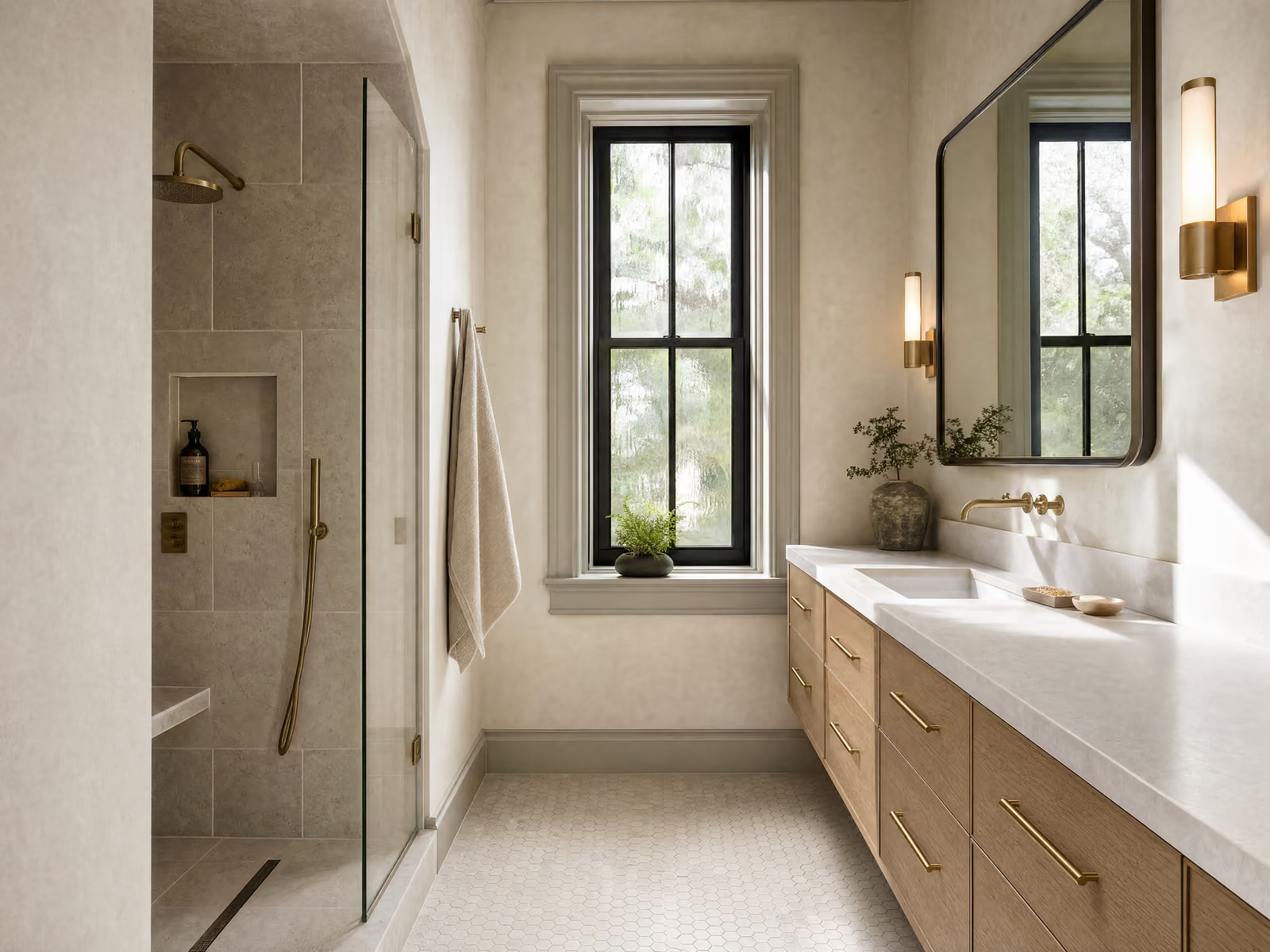
Remodeling contractor · Dallas
Bathroom remodeling in Dallas
Dallas bathrooms divide by era before anything else. A 1920s house east of downtown gives you a small room over a crawl space and generous options for moving a drain. A post-war house north of it gives you a slab, where the same drawing costs considerably more.
- 38.8% of Dallas houses are pier and beam, and that decides drain costs
- Interior bathroom work needs no Certificate of Appropriateness
- A conservation district and a landmark district are not the same rulebook
Two eras, one city, very different bathrooms
The bathrooms we are asked to rebuild in Dallas come overwhelmingly from two periods, and they present opposite problems. The older ones are small and easy to re-plumb. The newer ones are larger and expensive to re-plumb. Almost everything about your budget follows from which one you own, and the split is not close to even. Of the 276,197 houses on the Dallas Central Appraisal District's 2026 roll, 38.8% are pier and beam and 48.2% are slab.
Pre-war, east of downtown
The Tudors and prairie houses through the M Streets, Munger Place and Junius Heights were built with one bathroom, usually five by eight, and often nothing has changed since. Across the whole city, not just this stock, 29.9% of Dallas houses still have exactly one full bathroom. These sit on pier and beam over a crawl space, so relocating a toilet or moving a shower drain is work done underneath the floor rather than through concrete. That is the single largest cost advantage an older Dallas house has.
What comes with it is age. Original cast iron waste and galvanized supply are common and generally at the end of their service life, and the small footprint means most projects end up borrowing space from an adjoining closet or hallway. That is framing work, sometimes a load path, and always a decision about where the closet goes instead.
Post-war, north and northeast
Preston Hollow, Lake Highlands and the ranch stock built through the fifties and sixties are slab on grade. The bathrooms are larger and the supply lines are usually copper, so there is less to correct, but the drain is cast in concrete. Moving a fixture means saw-cutting the slab, re-plumbing and re-pouring.
So the advice inverts. In an older house we will happily discuss moving the layout. In a post-war house the cheapest good bathroom you can buy is one that keeps the fixtures roughly where they already are and spends the budget on what you can see.

In Dallas the first question is not what you want. It is which district you are in.
Landmark and conservation districts, east and north of downtown
Slab or crawl space, and what that costs
Three things separate a Dallas bathroom from the metro band more often than anything else.
Slab or crawl space
This is the first question we ask and it is worth thousands. Over a crawl space, moving a drain is a day of work underneath the floor. On a slab it is saw-cutting, re-plumbing and re-pouring. Which one you have is close to a lottery of ZIP code: on the 2026 appraisal roll it is 74.6% pier and beam in 75224 and 63.9% in 75208, against 0.0% in 75249. The same drawing is not the same price in those two houses, and we tell you which one you have before we quote.
What the original lines are made of
Cast iron waste and galvanized supply are common in the pre-war stock and are usually past their service life. Where we can see them before quoting, we do. Where we cannot, the allowance is a named line in your proposal rather than a change order in week three.
Whether the plan reaches an exterior wall
Inside the existing walls, no district rule applies. Add a window over a new tub or vent through an exterior wall in a landmark district and it needs a Certificate of Appropriateness, reviewed against that district's own criteria and usually a task force first. That is calendar rather than construction, and it belongs in the schedule at the start.
Real numbers, published
What a bathroom costs in Dallas.
The same published bands as the rest of the metro, because the method does not change. What changes in Dallas is which band you land in, and whether your house sits over a crawl space or on a slab is most of that answer.
The refresh
$12,000–$20,000
Everything stays where it is. New vanity, toilet, mirror, lighting, hardware and floor tile, with the existing tub or shower kept and re-grouted or re-glazed rather than rebuilt.
What moves the number: Tile choice and whether the existing shower pan is sound. If the pan or the surround has failed, this tier is not honestly available, and we will say so on the first visit, not after demolition.
The full remodel
$18,000–$34,000
Where most projects land
Down to the studs inside the existing footprint. New shower built from the substrate up with a bonded waterproofing membrane, hand-set tile, new cabinetry, new fixtures, and plumbing and electrical brought to current code.
What moves the number: Tile size and pattern, since large-format and herringbone both add days of labor. Then glass, whether the shower becomes curbless, and how far the drain has to travel if the layout changes at all.
Walls move
$34,000–$60,000+
The room changes shape. Taking space from a closet or an adjacent room, relocating the toilet or the shower, a wet room or a fully curbless entry, structural work, a full permit set and inspections.
What moves the number: Structural scope and drain relocation. Moving a toilet more than a few feet on a slab means cutting and re-pouring concrete, the single largest step change in bathroom pricing here.
Bands assume a DFW bathroom of roughly 35 to 90 square feet, plumbing walls staying put unless noted, and no concealed damage, the one thing no honest contractor can price before demolition. We carry it as an itemised allowance rather than padding the headline number, and unused allowance comes back to you.
Landmark districts, conservation districts, and the gap between them
Dallas protects neighborhoods two different ways and they are not interchangeable. A landmark district is the stricter one: exterior work needs a Certificate of Appropriateness before it starts, reviewed against design criteria written for that specific district rather than a citywide standard. Swiss Avenue, Munger Place, Junius Heights and Winnetka Heights each have their own ordinance.
A conservation district is the lighter one. It regulates things like setbacks, height and street-facing character rather than applying full preservation criteria, so plenty of work that would need a Certificate of Appropriateness a few streets away does not need one here. The two look identical from the sidewalk and are frequently confused, which is how a project gets designed against the wrong rulebook.
In a landmark district there is usually a step before the commission. A neighborhood task force reviews the application first and its recommendation goes up with the case, so the practical timeline includes a meeting that does not appear on any permit checklist. We find out which district you are in and what its criteria actually say before we design anything, because designing first and checking second is how a project loses a month.
Interior work is a different matter entirely. A bathroom or kitchen rebuilt inside its existing walls does not touch either process. Permits for plumbing, electrical and framing are separate and ordinary, and we pull them and manage the inspections as part of the fixed price.
Bathroom remodeling in Dallas, answered
Do I need a Certificate of Appropriateness to remodel my bathroom in Dallas?
My neighborhood is a conservation district. Is that the same thing?
How long does a Dallas bathroom take?
The parts that are the same everywhere
How a tiled shower is actually built, why grout is not waterproofing, what separates a renovation from an acrylic refit, and the full question and answer on cost across the metro all live on our bathroom remodeling page. This page covers only what is different about doing the work in Dallas.
The permit rules, the review calendar and everything else that is true of the place regardless of which room you are doing are on the Dallas page.
Also remodeling in Dallas: kitchen remodeling in Dallas, whole-home remodeling in Dallas.
Get your fixed price.
Two quick steps. We already know it is a bathroom, and the last step is the only place we ask for your number.
Step 1 of 2
Project: Bathroom
The fear is not the price. It is being left mid-build.
These four commitments are in the contract rather than on a badge.
A fixed written price
The number we sign is the number you pay. It moves only through a written change order you approve before any work starts.
A named project manager with a cell number
One person owns your project from demolition to final walkthrough. You get their mobile number on day one, and they answer it.
A written update every Friday
Photos, what happened this week, what happens next, and whether we are on schedule, in your inbox before the weekend either way.
Broom-clean every evening
Floor protection down every morning, tools packed out and floors swept every night. You are living here while we work, and we work like it.